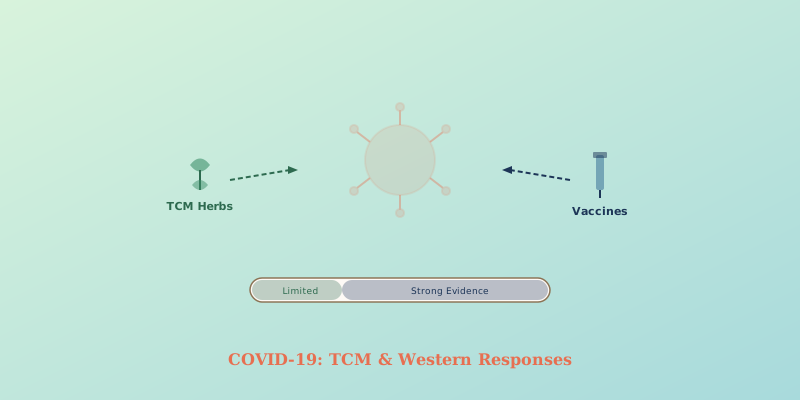
The COVID-19 pandemic became an unprecedented test for both medical systems. Western medicine developed vaccines at historic speed. China deployed TCM on a massive scale alongside conventional treatment. The pandemic exposed both the strengths and the vulnerabilities of each approach — and generated fierce debate about what constitutes acceptable evidence during a crisis.
China's TCM Response
China incorporated TCM into its national COVID-19 treatment protocols from the early stages of the pandemic. The government reported that over 90% of confirmed COVID-19 cases in China received some form of TCM intervention.
Key TCM Formulas Used
- Lianhua Qingwen (连花清瘟): A patent medicine containing 13 herbs including honeysuckle, forsythia, ephedra, and rhodiola. Originally developed during the SARS outbreak in 2003. A multicentre RCT published in Phytomedicine (2020) reported faster symptom recovery in mild-to-moderate COVID-19 patients compared to standard care alone, with an improvement in chest CT images. However, the study had methodological limitations including lack of blinding.
- Qingfei Paidu decoction (清肺排毒汤): A formula combining elements from four classical prescriptions, targeting the TCM diagnosis of "Cold-Damp pestilence affecting the Lung." Chinese health authorities reported high effectiveness rates in observational studies across multiple provinces. Independent verification outside China was limited.
- Xuanfei Baidu formula: Developed specifically for COVID-19, targeting "Damp-Toxin obstructing the Lung." Used primarily for moderate cases.
The TCM Diagnostic Framework for COVID-19
TCM practitioners classified COVID-19 through traditional pattern differentiation, identifying stages that roughly parallel disease progression: early stage (Cold-Damp exterior pattern), progressive stage (Damp-Heat accumulating in the Lung), severe stage (internal blockage and collapse), and recovery stage (Qi and Yin deficiency). Treatment formulas were adjusted for each stage — a highly individualised approach even during a pandemic.
Western Medicine's Response
Vaccines
The development of mRNA vaccines (Pfizer-BioNTech, Moderna) in under 12 months was arguably the greatest scientific achievement of the 21st century. Phase III trials demonstrated over 90% efficacy against symptomatic infection. Adenoviral vector vaccines (AstraZeneca, Johnson & Johnson) and inactivated virus vaccines (Sinovac, Sinopharm) provided additional options. Global vaccination campaigns prevented an estimated millions of deaths.
Antiviral Drugs
Paxlovid (nirmatrelvir/ritonavir) showed significant reduction in hospitalisation and death in high-risk patients. Remdesivir received emergency authorisation for hospitalised patients, though its benefit was debated. Molnupiravir showed modest efficacy. Monoclonal antibody treatments were initially effective but lost utility as variants evolved.
Supportive and Critical Care
Dexamethasone (a corticosteroid) was one of the first treatments proven to reduce mortality in severe COVID-19 — identified through the UK RECOVERY trial, a model of rapid, rigorous research. Prone positioning, high-flow oxygen, and mechanical ventilation saved countless lives in ICUs.
The Evidence Debate
The use of TCM for COVID-19 generated intense controversy:
Arguments Supporting TCM Use
- TCM has a 2,000-year history of treating epidemic febrile diseases (Wen Bing), with documented approaches to respiratory infections.
- Several published studies reported symptom improvement and faster recovery.
- In the early pandemic, when no Western treatments were available, TCM may have provided symptomatic relief and psychological support.
- TCM's role was primarily adjunctive — used alongside, not instead of, Western treatment in Chinese hospitals.
Arguments Against or Cautioning
- Most Chinese TCM-COVID studies lacked proper blinding, randomisation, and placebo controls.
- The near-universal positive results from Chinese studies raise concerns about publication bias.
- Government promotion of TCM during the pandemic was partly political, making objective evaluation difficult.
- No TCM formula has been shown to prevent COVID-19 infection or substitute for vaccination.
- International replication of Chinese TCM-COVID results has been limited.
TCM During COVID-19
- Deployed rapidly based on classical epidemic disease frameworks
- Some evidence for faster symptom recovery in mild cases
- Addressed symptoms (fever, cough, fatigue) with low side-effect burden
- Used as adjunctive therapy alongside Western treatment in China
- Study quality remained a significant concern
Western Medicine During COVID-19
- mRNA vaccines developed in record time with rigorous Phase III trials
- Dexamethasone proven to reduce mortality in severe cases
- Antiviral drugs (Paxlovid) reduced hospitalisation in high-risk patients
- Advanced ICU care saved lives in severe and critical cases
- Global coordination enabled rapid research and distribution
Lessons for Future Pandemics
- Speed matters: TCM could deploy existing formulas immediately; Western drug/vaccine development took months. Having pre-researched traditional formulas for epidemic diseases could provide stopgap treatments while specific pharmaceuticals are developed.
- Rigour matters: Enthusiasm for rapid deployment must not override the need for well-designed trials. Without rigorous evidence, neither tradition can claim credibility.
- Integration under crisis: China's experience showed that both systems can be deployed simultaneously if communication and coordination exist.
- Misinformation risk: Both TCM and Western medicine were subject to misinformation during the pandemic. Unproven "cures" proliferated in both traditions. Public health communication must address this across all medical systems.
Common Ground
The honest assessment is: Western vaccines and treatments have the strongest evidence for preventing death and severe disease from COVID-19. TCM may have a role in symptom management and recovery support for mild-to-moderate cases, but the evidence base needs strengthening with internationally designed, properly controlled trials. The two systems are not competitors in a pandemic — they potentially serve different functions (prevention and acute treatment vs. symptom management and recovery) that complement rather than replace each other.
Key Takeaway
COVID-19 tested both medical systems in real time. Western medicine's vaccine and drug development was a scientific triumph. TCM's rapid deployment drew on centuries of epidemic treatment experience but needs stronger evidence. The most important lesson may be that pandemic preparedness benefits from having multiple medical traditions available — as long as each is used for what it does best and evaluated with equal rigour.