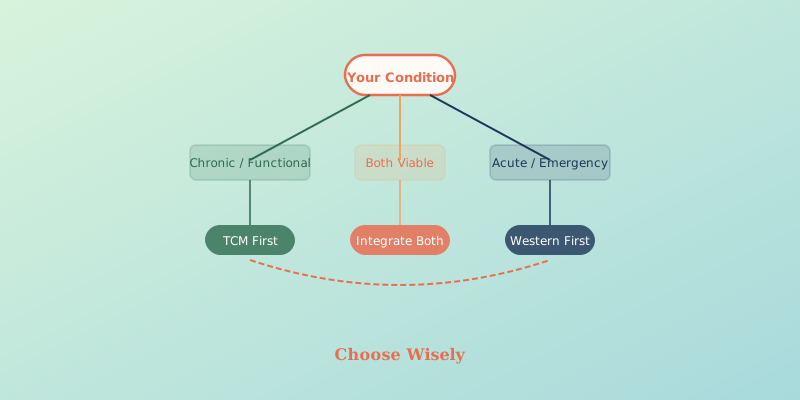
The most practical question anyone can ask about these two medical systems is simply: "When should I use which?" The answer is not "always TCM" or "always Western" — it depends on what you are dealing with. Here is a clear, evidence-informed framework to help you make that decision.
When Western Medicine Is the Clear First Choice
There are situations where delaying Western medical care can be life-threatening. In these cases, Western medicine should always come first:
- Medical emergencies: Heart attack, stroke, severe allergic reaction (anaphylaxis), major trauma, acute appendicitis, suspected meningitis. Call emergency services immediately.
- Acute infections requiring antibiotics: Bacterial pneumonia, urinary tract infections with fever, cellulitis, sepsis. Antibiotics are lifesaving here.
- Surgical conditions: Broken bones that need setting, ruptured organs, tumours requiring excision, blocked arteries needing stenting.
- Acute psychiatric crisis: Suicidal ideation, psychotic episodes, severe bipolar mania. These require immediate psychiatric evaluation and often medication.
- Diagnosis of serious pathology: When symptoms suggest cancer, autoimmune disease, or organ failure, Western imaging and laboratory tests are essential for accurate diagnosis.
If you are in doubt about whether something is an emergency, err on the side of going to the emergency department. TCM can always be added later; a missed emergency cannot be undone.
When TCM May Be a Strong Primary or First-Line Option
- Chronic pain: Low back pain, neck pain, knee osteoarthritis, headaches — particularly when medications are insufficient or causing side effects.
- Functional disorders: IBS, chronic fatigue, fibromyalgia — conditions where Western tests are normal but symptoms are real.
- Stress, mild anxiety, and mild depression: When symptoms are not severe enough to require medication, or as a complement to therapy.
- Menstrual irregularities: When no structural pathology has been identified and hormonal management is not desired.
- Prevention and wellness: Immune strengthening, seasonal health maintenance, stress management, and general vitality.
- Side effect management: Chemotherapy nausea, medication-induced digestive issues, treatment-related fatigue.
- Allergies and sinusitis: Particularly when antihistamines are insufficient or unwanted long-term.
Decision Framework by Condition Type
| Scenario | Best First Step | Then Consider Adding |
|---|---|---|
| Chest pain, sudden weakness, severe injury | Emergency department (Western) | TCM for recovery support after stabilisation |
| Suspected cancer | Western diagnosis and oncology | TCM for side effect management and supportive care |
| Bacterial infection with fever | Western antibiotics | TCM for recovery and immune support after acute phase |
| Chronic back pain (no red flags) | Either — both have evidence | Integrative: acupuncture + physical therapy |
| IBS or functional digestive issues | Western to rule out pathology | TCM for ongoing pattern-based treatment |
| Mild-moderate anxiety | Either — CBT, acupuncture, or both | Add the other if response is partial |
| Fertility support | Western evaluation of causes | TCM to optimise overall reproductive health |
| Recurrent colds | TCM (immune strengthening) | Western if symptoms suggest something more serious |
| General wellness and prevention | TCM (diet, qigong, herbal tonics) | Western screening (blood tests, imaging) at recommended intervals |
The "Both" Zone
For many conditions — particularly chronic, multifactorial problems — the best answer is "both." Integrative care is not about choosing sides; it is about using each system where it is strongest:
- Western medicine diagnoses and rules out dangerous pathology.
- TCM addresses the whole-person pattern and optimises the body's self-healing capacity.
- Western medicine handles acute flares; TCM provides long-term management.
- Both contribute to prevention — Western through screening, TCM through lifestyle medicine.
Choose TCM When...
- You have a chronic condition with no clear structural cause
- Western medications are causing unwanted side effects
- You want to focus on prevention and wellness
- Your condition is functional (tests normal, symptoms real)
- You prefer a holistic, individualised treatment approach
Choose Western When...
- You are in a medical emergency
- You need a definitive diagnosis of serious pathology
- Surgery or acute intervention is required
- You have a severe infection requiring antibiotics
- You are in acute psychiatric crisis
The Golden Rule
Never delay emergency or critical Western medical care in favour of TCM. And never dismiss TCM without trying it for conditions where it has evidence — particularly chronic pain, functional disorders, and quality-of-life support. The wisest patients are those who use both systems intelligently, with full communication between all their healthcare providers.
Key Takeaway
Western medicine is essential for emergencies, serious diagnoses, and acute interventions. TCM excels at chronic conditions, functional disorders, prevention, and whole-person care. For the many conditions that fall in between, the best approach is often to use both — with transparency and coordination.