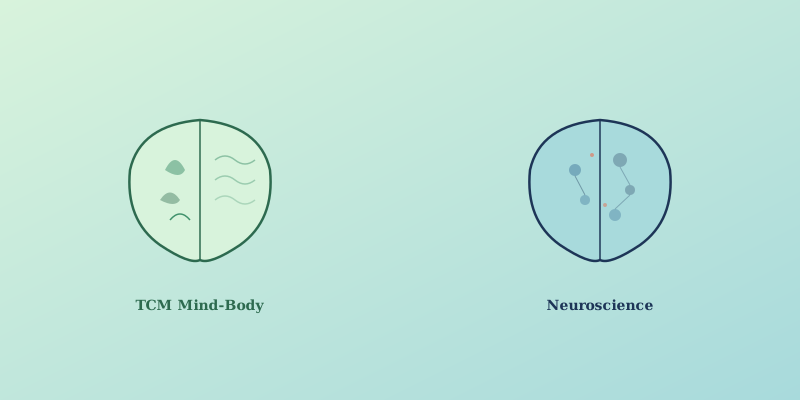
Mental health disorders affect nearly one billion people worldwide, and the treatment gap — the difference between those who need care and those who receive it — exceeds 50% even in wealthy nations. Both TCM and Western medicine offer frameworks for understanding and treating mental distress, yet they conceptualise the problem so differently that they might be describing different phenomena entirely.
TCM: The Organ-Emotion Framework
TCM does not separate mental and physical health. Emotions are considered physiological forces that directly affect organ function — and vice versa. This bidirectional relationship means that emotional problems can be treated through the body, and physical symptoms can be understood through emotions.
The Five Emotions and Their Organs
| Emotion | Organ System | Imbalance Manifestation |
|---|---|---|
| Anger / Frustration | Liver | Irritability, headaches, muscle tension, eye problems |
| Joy / Overexcitement | Heart | Anxiety, insomnia, palpitations, scattered thinking |
| Worry / Overthinking | Spleen | Digestive issues, fatigue, poor appetite, brain fog |
| Grief / Sadness | Lung | Shortness of breath, weak voice, susceptibility to colds |
| Fear / Shock | Kidney | Lower back pain, frequent urination, hair loss, poor memory |
Common TCM Treatments for Mental Health
Acupuncture is increasingly studied for anxiety and depression. Multiple systematic reviews have found acupuncture comparable to antidepressants for mild-to-moderate depression, with fewer side effects. Common point protocols include Heart 7 (Shenmen), Pericardium 6 (Neiguan), and Yintang (the "third eye" point between the eyebrows).
Xiao Yao San (Free and Easy Wanderer) is the most researched TCM formula for depression and anxiety. It addresses the common pattern of Liver Qi stagnation with Spleen deficiency — essentially, emotional constraint combined with digestive and energy symptoms. Chinese meta-analyses have found it comparable to fluoxetine for mild depression, though Western reviewers note that study quality is often limited.
Mind-body practices including qigong, tai chi, and meditation are integral to TCM's mental health approach. These practices regulate the autonomic nervous system, reduce cortisol, and increase vagal tone — effects that modern neuroscience is confirming with increasing precision.
Western Psychiatry: Neurotransmitters and Evidence-Based Therapy
The Biomedical Model
Western psychiatry's dominant framework views mental disorders as brain-based conditions involving neurotransmitter imbalances, structural brain differences, genetic predispositions, and neuroinflammation. The DSM-5 (Diagnostic and Statistical Manual of Mental Disorders) classifies mental illnesses into discrete categories based on symptom clusters.
Pharmacotherapy
SSRIs (fluoxetine, sertraline, escitalopram) increase serotonin availability and are first-line treatments for depression and anxiety disorders. They are effective for moderate-to-severe cases but come with side effects including sexual dysfunction, weight changes, and withdrawal symptoms. SNRIs, benzodiazepines, mood stabilisers, and antipsychotics address other conditions across the psychiatric spectrum.
Psychotherapy
CBT (cognitive-behavioural therapy) is the most evidence-supported psychotherapy, proven effective for depression, anxiety, PTSD, OCD, and insomnia. It works by identifying and restructuring maladaptive thought patterns. Other effective modalities include DBT (dialectical behaviour therapy), EMDR (for trauma), and psychodynamic therapy.
Emerging Approaches
Transcranial magnetic stimulation (TMS), ketamine infusions, and psilocybin-assisted therapy represent the cutting edge of treatment-resistant depression research, offering hope where traditional medications fail.
TCM Strengths in Mental Health
- No mind-body split — treats emotional and physical symptoms together
- Minimal side effects from acupuncture and herbal formulas
- Addresses constitutional patterns, not just symptom clusters
- Mind-body practices (qigong, tai chi) as primary treatments
- Less stigma in cultures where TCM is normalised
Western Strengths in Mental Health
- Effective pharmacotherapy for severe depression, psychosis, bipolar disorder
- Evidence-based psychotherapies with robust clinical trial support
- Crisis intervention and acute psychiatric care infrastructure
- Neuroimaging advancing understanding of brain-based mechanisms
- Standardised diagnostic criteria enable research and communication
How They Complement Each Other
Integrative mental health care uses Western diagnostics to assess severity and safety (ruling out bipolar disorder, psychosis, or suicidal risk that require immediate pharmacological or inpatient intervention), then layers TCM treatments for enhanced recovery. Acupuncture can augment SSRI therapy, potentially allowing lower doses. Herbal formulas may address the gut-brain axis symptoms that medications miss. Qigong and tai chi serve as embodied mindfulness practices that complement CBT's cognitive approach. The combination addresses mental health from multiple angles — neurochemical, emotional, physical, and spiritual.
Key Takeaway
For severe psychiatric conditions, Western medicine remains essential. For mild-to-moderate anxiety and depression — which represent the majority of cases — TCM offers credible complementary options with fewer side effects. The most comprehensive mental health care may be one that addresses both the brain and the whole person.